
Technique · 2 June 2026
why dusk is
worth the wait
Most agents I work with already understand the value of a dusk shoot. It's not just about the colour of the sky. It's about the balance.
Interior glow against an evening exterior gives you depth, warmth, and a quiet sense that someone lives there that no daytime shot ever quite matches. But dusk is also the hardest shoot to plan most of the time. The window is narrow, the conditions can be unforgiving, and the property has to be ready before the light arrives.
I'll be upfront about something: not every home suits a dusk shoot. In real estate you get all kinds of properties: different designs, different eras, some brand new, some decades old and closer to needing a knockdown rather than a hero shot, and some with very little artificial lighting to work with at all. A tiny front window and a porch bulb isn't a lot to build a scene around at 7pm. In those cases, I'd rather tell a client honestly that a dusk shoot isn't going to add value for that particular property, because I only have five shootable nights a week and I want to spend them where they'll actually make a difference to a listing. My long-term clients know I'll always give it to them straight, and I think that's part of why they keep coming back. They know the recommendation is about what will genuinely help their listing, not about upselling a shoot.
The window is shorter than people think
The sweet spot begins just a few minutes after the sun drops below the horizon. From there I have 10 to 15 minutes before it gets too dark, exposures get too long, and the sky turns dark blue then black. Show's over. I need to be efficient and know exactly what shots I want before start. I always plan them out during the day shoot when I can. It saves a lot of stress. If dusk is booked separately from the day shoot, I always arrive at least 30 minutes early to walk the property and plan. Most of the time it'll be the same angles from the day shoot anyway, and more often than not my client ends up using the dusk images exclusively. That window also shifts by a few minutes every week of the year, so the timing gets recalculated each booking. In winter here in NSW I'm shooting from 4:50pm. In summer with daylight savings, sometimes 8pm, home by 9. That's part of what goes into the cost of these shoots.
When I reschedule, and why
Storms and heavy rain are a hard no. Safety comes before any deadline, every time. Beyond that, the timing falls apart and the image quality goes with it. Day shoots in the rain are hard enough to work with. Overcast is a different conversation and can actually move the shoot earlier. Some properties can even present better without a dramatic sky competing with the architecture, and a sky replacement can cover the gap when needed. But I try to stay as natural as possible, authenticity is key. Sky replacements are a fallback, but never a first preference, and when I need to do it, I'll pick something that looks realistic and blends in naturally with the property and its features.
How to prepare
Every light should be switched on inside and out, with one exception: spotlights and security lights stay off. At dusk they create a harsh starburst effect that pulls the eye away from the property. Keep the light temperature consistent too, especially outside. A mix of warm and cool colour temperatures creates problems when images are blended in editing, and the results are hard to fix. Warm lighting for a home always works best; you're selling a place for someone to live in, not a commercial space. Blinds open (sheer curtains are fine to keep closed in most cases, they diffuse harsh light), move cars out of the driveway, and if possible keep them away from the street frontage too. It's worth asking neighbours if they wouldn't mind parking a little further away for a few minutes. Some of the best front facade shots are taken with a 50mm from across the street, and a random parked car in the way can ruin the frame. If I was there earlier in the day, I recommend leaving everything as I left it. And it's best not to hose down the concrete beforehand, especially in summer. I know it seems like a good idea, but it can cause more problems than it solves. In the heat it tends to dry in patches and appears worse in the image than if left alone; in the cold it stays wet and becomes a slip hazard.
So, how many shots before it's overkill?
Most properties I'll limit to six angles in a dusk session, but usually only one or two end up carrying the whole listing. The hero shot, the one that opens the campaign, is almost always a front exterior with the door visible and warm light spilling onto the front porch. Then there's the shot from the end of the yard looking back toward the house: bedroom windows lit up, the alfresco glowing, doors wide open to see through to the interior. Those are the images buyers tend to remember after scrolling past forty others.
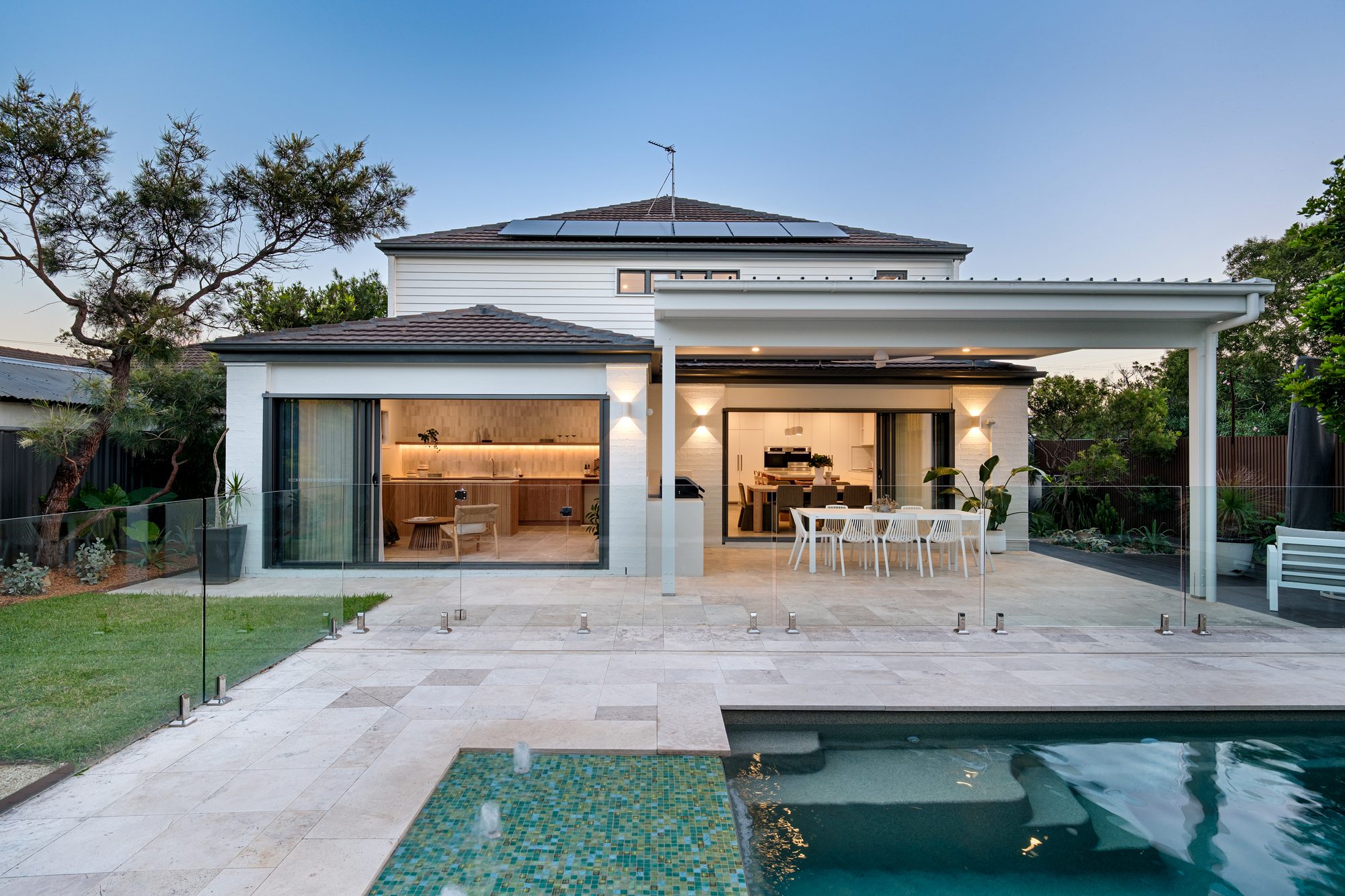
That kind of shot makes all the prep work worth it.